

As a buyer of electric kettles, I’m seeing huge price differences across suppliers for the identical model—how do I navigate this?

When it comes to purchasing an electric kettle, the core decision-making logic always revolves around the balance between quality and price. Many consumers fall into two extremes: blindly pursuing low prices and ignoring potential quality hazards, or equating high prices with top-tier quality and overpaying for unnecessary functions. In fact, a rational purchase requires breaking the "price equals quality" myth and establishing a comparison framework that links core quality indicators to price tiers, ensuring that every penny spent corresponds to real value.
First, we need to clarify the core quality dimensions of electric kettles that directly determine user experience and safety—these are the foundational basis for price comparison. The first key indicator is the inner pot material, which is closely related to food safety and service life. Food-grade 304 stainless steel is the mainstream cost-effective choice, with stable chemical properties that prevent rust and heavy metal leakage, and it is widely used in mid-range and entry-level products. Food-grade 316 stainless steel, with higher corrosion resistance and better stability, is mostly used in high-end models, suitable for users who pursue long-term use and higher safety standards; while low-cost kettles may use 201 stainless steel or even non-food-grade materials, which are prone to rust, odor, and potential health risks after long-term use—this is the core reason why some kettles are priced as low as tens of yuan.
The second core quality indicator is heating efficiency and durability. High-quality electric kettles adopt a fully enclosed heating plate or a thickened integrated heating structure, which heats water evenly, shortens boiling time (generally 3-5 minutes for 1.5L water), and has good heat dissipation performance, effectively extending the service life of the heating element. In contrast, low-priced kettles often use thin heating plates with simple structures, which not only take longer to boil water (6-10 minutes) but also are prone to scaling and burnout, requiring frequent replacement. In addition, the quality of the thermostat is another hidden factor: brand-name thermostats (such as those from Strix) have high temperature control accuracy, can automatically power off after boiling to avoid dry burning, and have a service life of 5000+ boiling cycles; while low-cost kettles use inferior thermostats, which may have delayed power-off or failure, posing safety hazards such as dry burning and short circuits.
The third indicator is safety protection and user-friendly design, which reflects the brand's R&D investment and product refinement. High-quality electric kettles are equipped with multiple safety protections: dry-burn protection, overheat protection, overvoltage protection, and leakage protection, forming a comprehensive safety barrier. At the same time, user-friendly designs such as a detachable filter (easy to clean scale), a 360° rotatable base (convenient for left and right-handed users), and a heat-insulating outer shell (preventing scalds) are also important manifestations of quality. These designs require additional R&D and production costs, so products with complete safety functions and thoughtful details are often priced higher than basic models without these configurations.
On the other hand, the price of electric kettles is not only determined by quality but also affected by brand positioning, product functions, and after-sales services—these are the "additional values" that need to be considered in the price-quality comparison. Entry-level products (priced 50-150 yuan) mainly meet the basic demand of boiling water: they adopt 304 stainless steel inner pots, basic heating plates, and simple safety protection (only dry-burn protection), with no extra functions. They are suitable for temporary use (such as renting) or users with extremely limited budgets, but it should be noted that the service life is generally 1-2 years, and regular inspection of the inner pot is required to avoid safety risks.
Mid-range products (priced 150-300 yuan) are the cost-effective choice for most households, balancing quality and functionality. They usually use food-grade 304 stainless steel inner pots, high-quality thermostats, and complete safety protection functions. On this basis, they add practical functions such as temperature control (adjustable to 45℃, 60℃, 85℃ for brewing milk, tea, and coffee) and automatic power-off memory. The service life is 3-5 years, and mainstream brands provide 1-2 years of after-sales warranty, which is suitable for ordinary families pursuing stable use and comfortable experience.
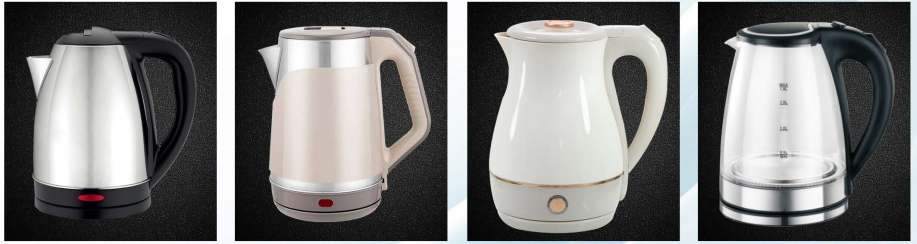
High-end products (priced above 300 yuan) focus on premium experience and long-term value. They often adopt 316 stainless steel or ceramic inner pots (suitable for users who are sensitive to metal odors), rapid heating technology (boiling 1.5L water in 2-3 minutes), and intelligent functions such as APP remote control and timing boiling. In addition, high-end brands pay more attention to product design (such as minimalist appearance, small size for small kitchens) and after-sales service (2-3 years of warranty, free maintenance for core components), and the brand premium and R&D costs for these additional values are the main reasons for the high price. They are suitable for users who pursue high safety, intelligent experience, and are willing to pay for brand and durability.
It is worth emphasizing that the key to the quality-price comparison is not "the cheaper the better" or "the more expensive the better", but "matching demand with value". For example, if you are a renter who moves frequently, an entry-level kettle with basic safety and low price is sufficient—there is no need to pay for high-end materials and intelligent functions that you will not use. If you are a family that uses the kettle every day to brew milk, make tea, and boil water, a mid-range product with temperature control and reliable quality is the most cost-effective choice, as it balances experience and cost. If you pursue long-term use, high safety, and intelligent experience, a high-end kettle with 316 stainless steel and complete functions is worth investing in, as its longer service life and better experience can offset the higher initial price.
In addition, we need to avoid two common misunderstandings in the comparison. The first is confusing "function redundancy" with "high quality": some low-priced kettles claim to have multiple functions such as temperature control and timing, but the core quality (inner pot material, thermostat) is shoddy—these functions are just gimmicks and cannot guarantee stable use. The second is ignoring the cost of after-sales service: low-cost kettles often have no after-sales warranty or only a 3-month warranty, and once a fault occurs, they can only be discarded; while brand-name products have sound after-sales systems, and timely maintenance can extend the service life, which is an important part of the overall value.
In conclusion, the logic of quality vs. price comparison for electric kettles follows a simple core: first, judge the basic value through core quality indicators (inner pot material, heating element, safety protection), then measure the additional value through brand, functions, and after-sales service, and finally match it with your own usage needs. A rational purchase means abandoning blind price obsession, focusing on real quality, and ensuring that every yuan spent is converted into reliable safety, comfortable experience, and appropriate durability—this is the most scientific way to choose an electric kettle that suits you.


请先 登录后发表评论 ~